
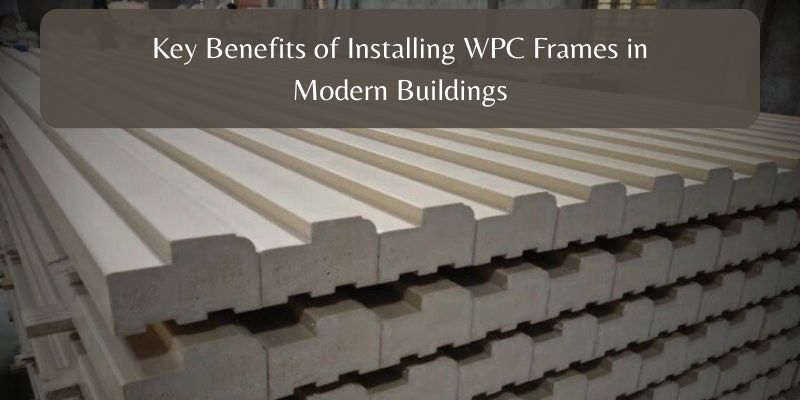
Key Benefits of Installing WPC Frames in Modern Buildings
Modern construction increasingly prioritises materials that balance durability, design flexibility, and long-term efficiency. As buildings evolve to meet changing lifestyle and environmental expectations, traditional framing materials are being reassessed. In this context,WPC Frames have emerged as a practical alternative, offering a refined blend of performance and aesthetics that aligns well with contemporary architectural demands.
Rather than functioning as a purely structural element, these frames contribute to overall building quality by supporting consistency, longevity, and ease of integration across varied design styles.
Material Composition That Supports Performance
Wood Plastic Composite is engineered by combining wood fibres with polymer resins. This composition results in a material that reflects the visual warmth of wood while benefiting from the resilience of plastic-based components.
The outcome is a stable, uniform product less prone to common material limitations such as warping, cracking, or moisture absorption. This stability supports reliable performance across different climatic conditions and building types.
Durability in High-Use Environments
Frames are subject to repeated stress through daily use, environmental exposure, and structural movement. Materials that degrade quickly compromise both appearance and function.
WPC-based frames maintain structural integrity over extended periods, making them suitable for residential, commercial, and institutional spaces where consistent performance is essential.
Resistance to Moisture and Humidity
Moisture exposure remains a significant challenge in building interiors and exteriors. Conventional materials often absorb water, leading to swelling or decay.
WPC frames resist moisture penetration, ensuring dimensional stability even in areas with fluctuating humidity. This quality is particularly beneficial in kitchens, bathrooms, and coastal regions.
Visual Consistency Across Design Styles
Modern buildings often combine minimalism with functional detailing. Frames must support this aesthetic without drawing unnecessary attention.
WPC solutions offer smooth finishes and consistent textures that complement both contemporary and transitional interiors. Their uniform appearance enhances visual harmony across spaces.
Reduced Maintenance Requirements
Ongoing maintenance adds long-term cost and effort to building ownership. Materials that demand frequent treatment or replacement can undermine efficiency.
WPC frames require minimal upkeep, eliminating the need for regular polishing, painting, or sealing. This low-maintenance characteristic contributes to long-term convenience.
Thermal and Acoustic Support
Frames influence indoor comfort beyond their visual role. Properly designed materials help reduce heat transfer and external noise infiltration.
WPC structures offer insulating properties that support temperature regulation and contribute to quieter interiors, enhancing occupant comfort.
Sustainability Considerations in Material Choice
Sustainable construction increasingly guides material selection. WPC products incorporate recycled components and reduce reliance on solid timber.
This approach supports responsible resource use while maintaining performance expectations, aligning building design with environmental awareness.
Adaptability in Window Installations
Window framing requires precision and stability to ensure proper sealing and alignment. Variations in material performance can affect energy efficiency and usability.
Modern wpc window frames provide consistent dimensions and structural reliability, supporting accurate installation and long-term functionality.
Strength and Reliability for Door Applications
Door frames experience frequent movement and load stress. Materials must retain shape and strength over time to ensure smooth operation.
Well-engineered wpc door frames handle repeated use without deformation, supporting both hinged and sliding door systems across building types.
Compatibility With Modern Construction Methods
Construction practices continue to evolve toward modular and prefabricated systems. Materials that adapt easily to these methods enhance efficiency.
WPC frames integrate smoothly with contemporary building techniques, allowing for quicker installation and reduced on-site adjustments.
Aesthetic Longevity Over Time
Unlike materials that age unevenly, WPC maintains a consistent appearance throughout its service life. Colour stability and surface integrity reduce visible ageing.
This longevity ensures that interiors retain a polished look without periodic refurbishment.
Cost Efficiency Across the Building Lifecycle
While initial material selection is important, long-term value often determines overall cost effectiveness. Reduced maintenance, extended lifespan, and consistent performance contribute to economic efficiency.
WPC frames support this lifecycle approach by minimising replacement and repair requirements.
Why WPC Frames Suit Modern Construction
- ● Offer durability across diverse environments
- ● Resist moisture and dimensional changes
- ● Require minimal ongoing maintenance
- ● Support consistent visual design
- ● Align with sustainable building goals
Conclusion
WPC frames represent a thoughtful response to the demands of modern building design, combining structural reliability with aesthetic restraint and environmental awareness. Their ability to perform consistently while reducing maintenance burdens makes them a practical choice for contemporary construction projects. As designers and builders continue to prioritise efficiency and longevity, wpc doors and frames stand out as a reliable solution—an approach reflected in the material philosophy of Woodalt.
← Back to Blogs