
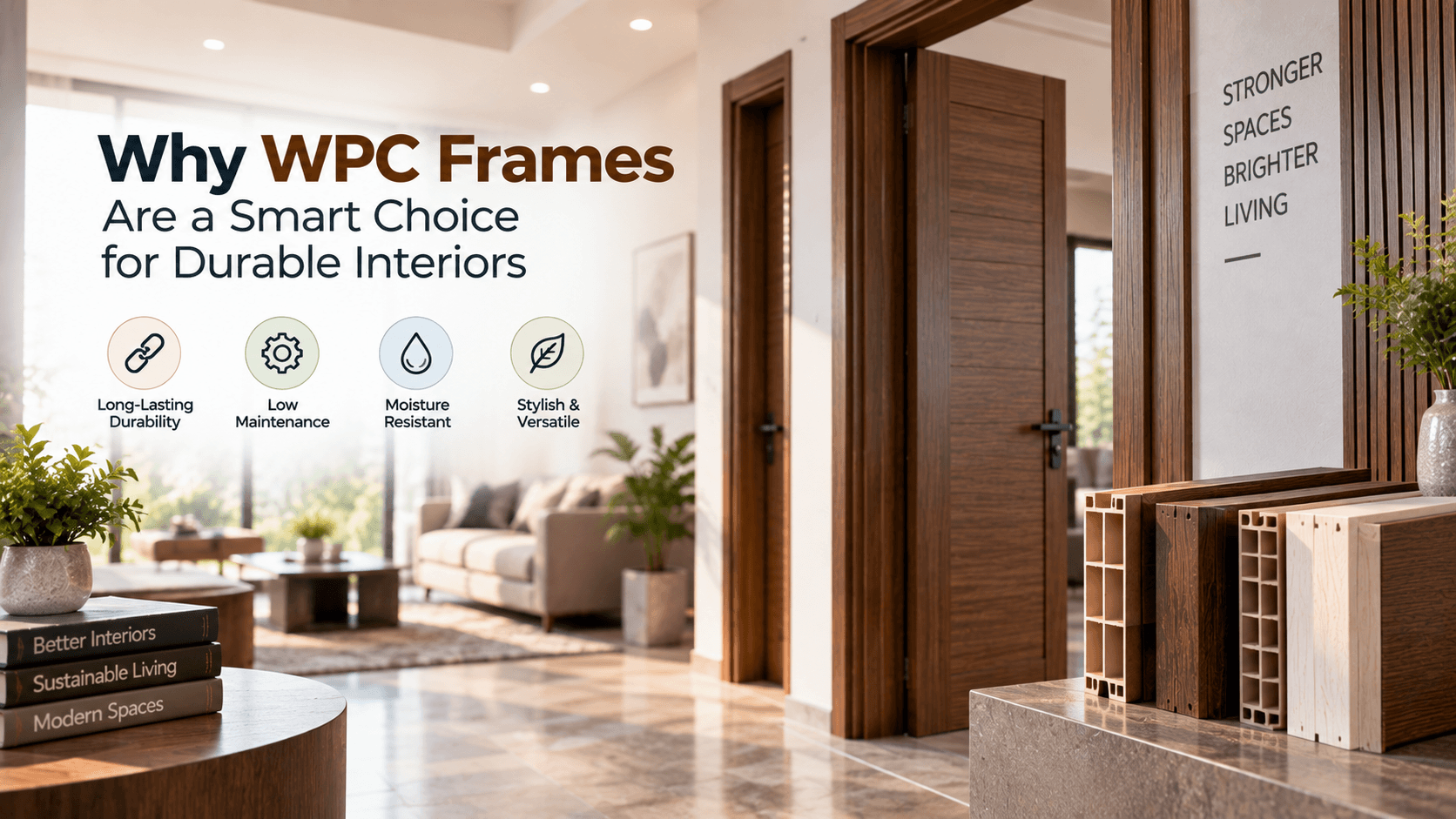
Why WPC Frames Are a Smart Choice for Durable Interiors
Choosing a door and frame material is an important part of planning a home, office, or commercial interior. Buyers increasingly look beyond appearance and consider moisture exposure, maintenance, durability, and long-term performance. WPC Frames can address several of these requirements while offering design flexibility. WoodAlt, a brand focused on wood alternatives and WPC products, provides solutions for interior and exterior applications.
What to Consider Before Choosing a Frame
A frame supports the door and influences how smoothly the complete installation functions. Its material should suit the environment rather than being selected only for appearance. Bathrooms, kitchens, utility rooms, and spaces with changing humidity can place different demands on a frame than dry interiors.
When comparing options, consider water exposure, termite concerns, frequency of use, maintenance, hardware compatibility, and the desired finish.
WPC is a composite material developed as an alternative to conventional wood. Its suitability depends on the specific product, application, and installation conditions, so technical specifications should be reviewed before purchase.
How Material Choice Affects Door Performance
The frame and door work as a single system. Selecting wpc doors and frames can be useful when a project requires a coordinated material approach, particularly in areas where moisture resistance and lower maintenance are important.
WoodAlt lists water resistance, termite resistance, low maintenance, flame retardancy, and non-toxic construction among its product advantages. These features can make WPC worth evaluating where conventional wood may require additional protection or upkeep.
Performance is not determined by material alone. Accurate measurements, appropriate fixing methods, suitable hardware, and careful installation all contribute to the finished result. A suitable product can still perform poorly if it is incorrectly installed or used outside its recommended application.
Where WPC Can Fit Into Modern Projects
Composite materials can suit projects with different functional requirements, including bedrooms, bathrooms, offices, and service areas.
For moisture-prone areas, water-resistant materials can be particularly relevant. Where termite concerns are significant, resistance to termites may also influence the specification. Lower maintenance can be useful in busy commercial environments where regular refinishing is inconvenient.
Buyers should compare finishes, dimensions, thicknesses, and design options with the architectural style.
Getting the Frame Details Right
A door frame needs to work with the opening, door leaf, hinges, locks, and installation method. This makes accurate specification essential. wpc door frames may be appropriate where resistance to moisture, termites, and routine wear is a priority, but the correct size and product specification should be confirmed before ordering.
A useful selection checklist includes:
| Factor | What to check |
|---|---|
| Dimensions | Opening size, frame depth, and required thickness |
| Environment | Moisture, humidity, and exposure conditions |
| Hardware | Hinge, lock, and fixing compatibility |
| Finish | Colour, texture, and design requirements |
| Installation | Recommended fixing method and site conditions |
| Maintenance | Cleaning and ongoing care requirements |
Discussing these details with the supplier or installer can prevent avoidable issues and help ensure that the chosen material suits the project.
Comparing Options With Practical Priorities
Traditional wood remains useful in many applications, but it can require treatment and ongoing maintenance depending on the environment. WPC is designed as an alternative with different performance characteristics.
The right decision should be based on project priorities rather than a blanket preference for one material. Consider expected service conditions, budget, appearance, maintenance expectations, and technical requirements together.
Conclusion
A durable door installation starts with choosing materials that match the conditions in which they will be used. WPC can be a practical alternative when moisture resistance, termite resistance, lower maintenance, and consistent specifications are important. The same careful approach can help when evaluating wpc window frames, particularly where environmental exposure and long-term upkeep need consideration. Reviewing specifications, installation requirements, and project priorities before purchase remains the most reliable way to make an informed choice.
← Back to Blogs