
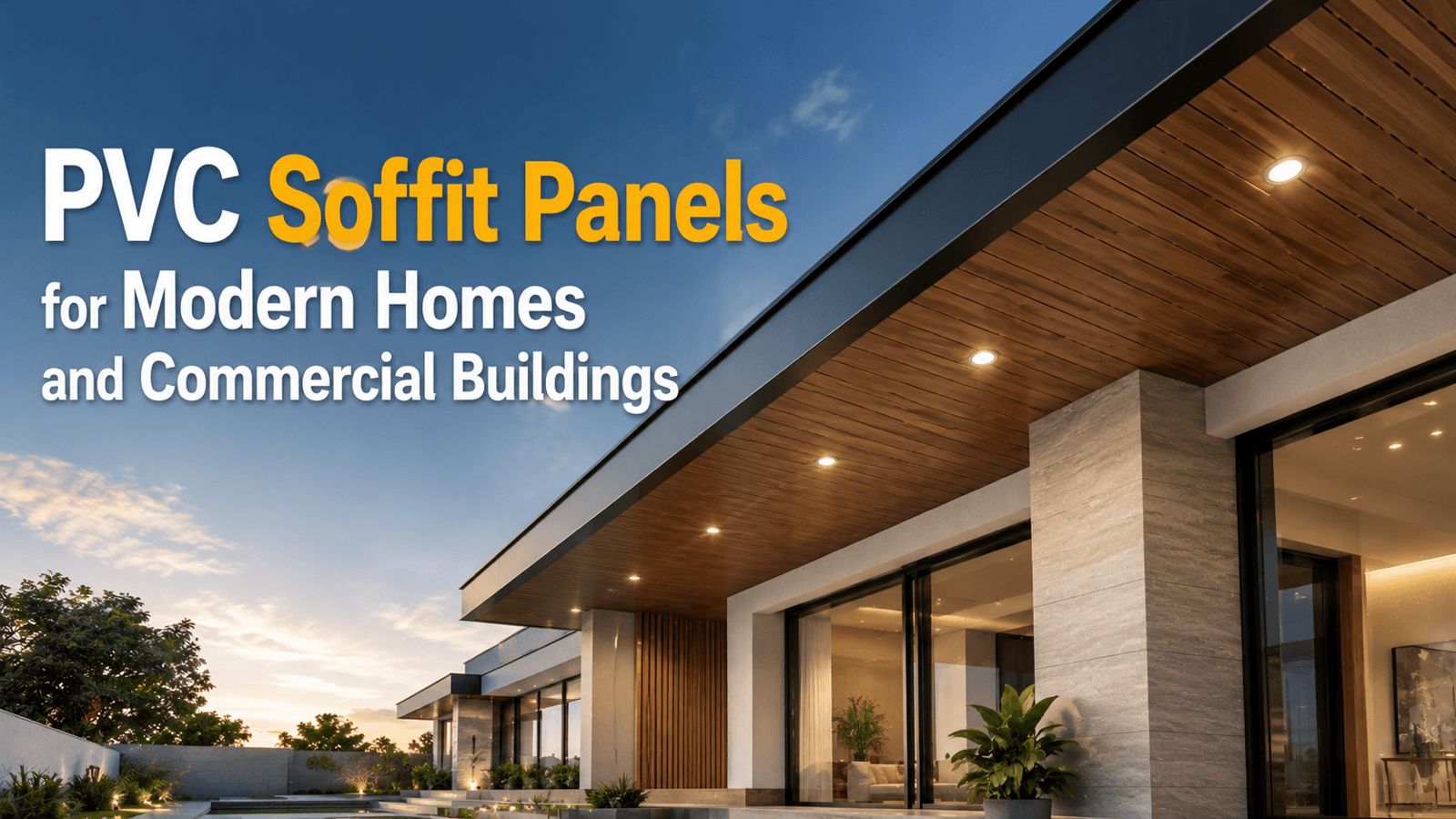
PVC Soffit Panels for Modern Homes and Commercial Buildings
Exterior finishing materials play an important role in protecting buildings while enhancing their overall appearance. Among the many options available today, PVC Soffit Panels have become a practical choice for architects, builders, and property owners seeking a clean finish with minimal maintenance. Installed beneath roof overhangs, they help improve ventilation, conceal structural components, and contribute to a polished architectural design. Their combination of functionality and visual appeal makes them suitable for both residential and commercial construction projects.
Why PVC Soffit Panels Improve Roof Ventilation and Appearance
The soffit area is often overlooked during construction, yet it significantly influences a building's performance. Properly designed soffit systems encourage airflow into roof spaces, helping regulate moisture and temperature while improving the longevity of the roof structure.
Some of the key benefits include:
- Supports roof ventilation
- Creates a neat exterior finish
- Resists moisture and insects
- Requires minimal maintenance
- Complements various architectural styles
These features make soffit systems an important element in modern building design, balancing practical performance with aesthetic value.
Understanding the Advantages Before Installation
Before selecting exterior finishing materials, builders often evaluate long term performance, maintenance needs, and compatibility with the overall structure. The Advantages Of PVC Soffit Panels become more evident when considering projects that require durable materials capable of withstanding changing weather conditions.
Important considerations include:
- Resistance to humidity
- Ease of installation
- Low maintenance requirements
- Consistent surface finish
- Compatibility with different roof designs
Reviewing these aspects helps property owners choose materials that align with both functional needs and architectural preferences.
Performance Comparison for Exterior Finishing Materials
Choosing the right soffit material requires understanding how different performance characteristics contribute to a building's overall efficiency.
Performance Feature | Practical Contribution |
Ventilation support | Improves airflow beneath roof structures |
Moisture resistance | Helps reduce water related damage |
Color stability | Maintains an attractive appearance over time |
Lightweight construction | Simplifies handling during installation |
Easy cleaning | Reduces maintenance effort |
Evaluating these characteristics allows project teams to select solutions that provide dependable performance while maintaining an appealing exterior.
Applications Across Different Types of Construction
Many construction projects require finishing materials that combine durability with design flexibility. PVC Soffit Panels Manufacturers develop products that can be incorporated into a wide variety of structures, allowing architects to achieve consistent exterior detailing across different building styles.
Common applications include:
- Independent houses
- Apartment complexes
- Office buildings
- Educational institutions
- Commercial facilities
Their adaptability enables builders to create visually appealing rooflines while supporting effective ventilation and long term structural protection.
Best Practices for Long Term Maintenance
Although soffit systems are designed for durability, routine maintenance helps preserve both their appearance and functionality throughout their service life.
Recommended maintenance practices include:
- Clean surfaces using mild soap and water
- Remove leaves and debris from ventilation openings
- Inspect joints during seasonal maintenance
- Avoid abrasive cleaning materials
- Check surrounding roof components regularly
Following these simple steps helps maintain the overall performance of exterior finishing systems while extending their useful lifespan.
FAQs
1. What are PVC soffit panels used for?
They are installed beneath roof overhangs to improve ventilation, protect structural components, and enhance exterior appearance.
2. Why is roof ventilation important?
Proper ventilation helps reduce moisture buildup, supports temperature regulation, and contributes to the longevity of roofing systems.
3. Are PVC soffit panels suitable for commercial buildings?
Yes, they are widely used in residential, commercial, institutional, and mixed use construction projects.
4. Do soffit panels require frequent maintenance?
No, periodic cleaning and routine inspections are generally sufficient to maintain their appearance and performance.
5. What factors should be considered before selecting soffit materials?
Ventilation requirements, weather resistance, maintenance needs, installation methods, and architectural design should all be evaluated.
Conclusion
Selecting suitable exterior finishing materials contributes to better building performance, improved aesthetics, and easier long term maintenance. Well designed soffit systems support roof ventilation while protecting structural elements from environmental exposure. Understanding PVC Soffit Panels Durability helps property owners make informed decisions that balance appearance with lasting performance. Woodalt continues to contribute innovative exterior solutions that meet the evolving requirements of modern residential and commercial construction.